Gluing the mounting sleeve to the masonry
 Observe minimum distances to other shell and façade components. Note the dimensions and position of the plaster frames.
Observe the minimum installation height of the mounting sleeve. Do not install the mounting sleeve flush with the ground. The required load-bearing capacity above the mounting sleeve limit the height upwards.
- Apply mounting adhesive to the soffit and mounting sleeve.
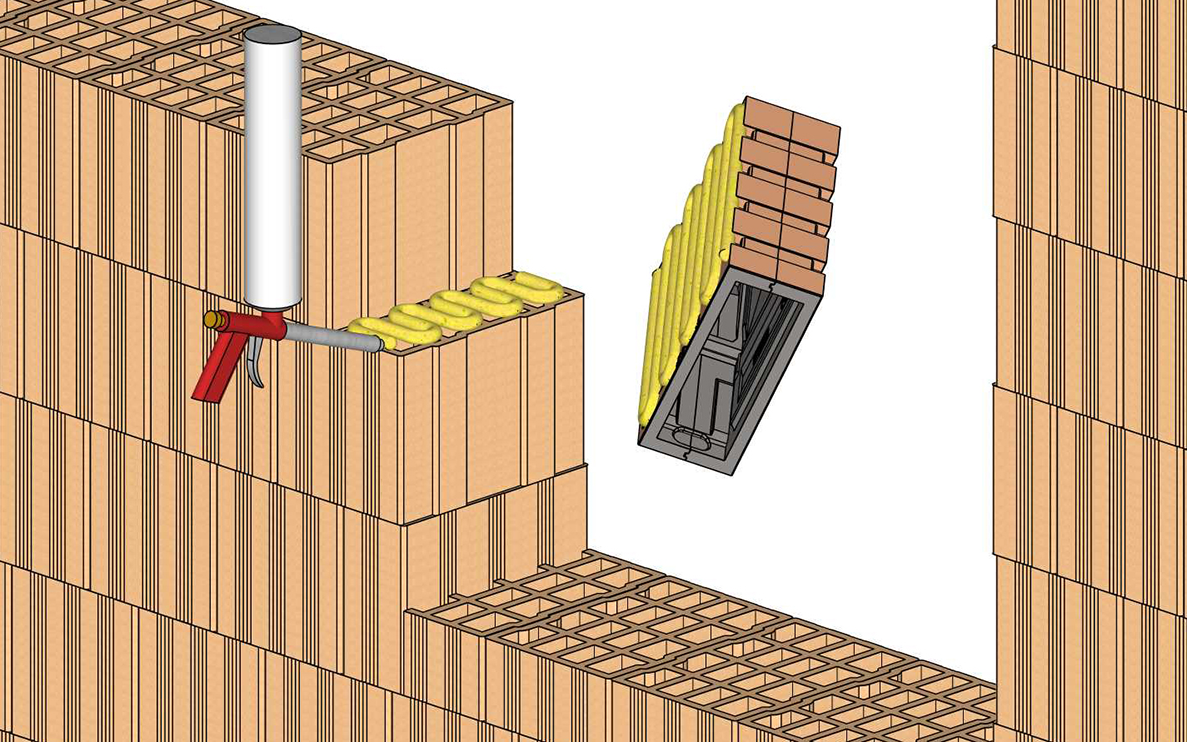
Interior wall
- Insert the mounting sleeve flush, aligned with the exterior wall and exactly horizontally (15 mm projection on the external plaster frame).
Observe a 0° inclination. Ensure that the inclination is precisely balanced in all directions and check with a spirit level. Note the symbols on the mounting sleeve: top, bottom, inside, outside and position of the spirit level. - Check the position of the mounting sleeve on the exterior wall with the rod level. Rework if necessary. Observe the distance for the required minimum plaster thickness.
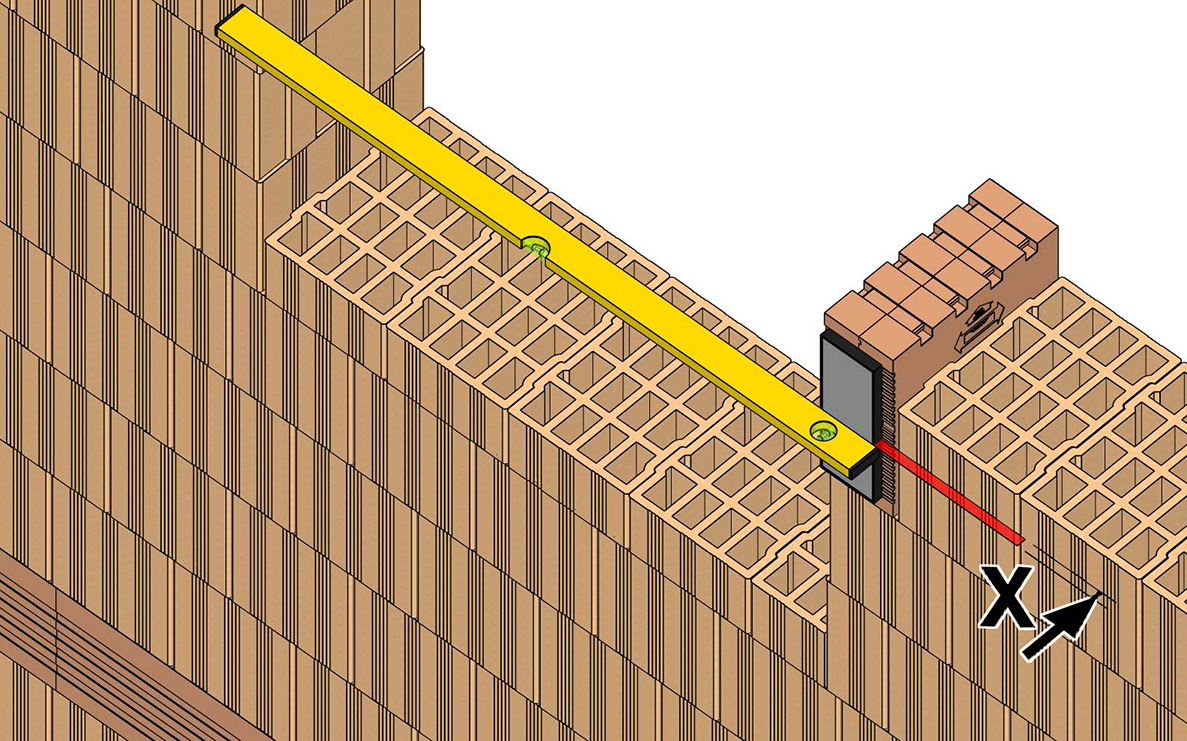
Exterior wall
ATTENTION: Building/moisture damage due to condensation if installation position is incorrect. The covers cannot be aligned exactly (inclined installation position). Carry out all installations in accordance with the recognised rules of technology.
ATTENTION: Damage to the mounting sleeve A half starting stone must not rest on the mounting sleeve. Instead a full starting stone should be cut out. Apply mounting foam to all sides to be bonded. Brick up the soffit and glue the mounting sleeve to the side and top.
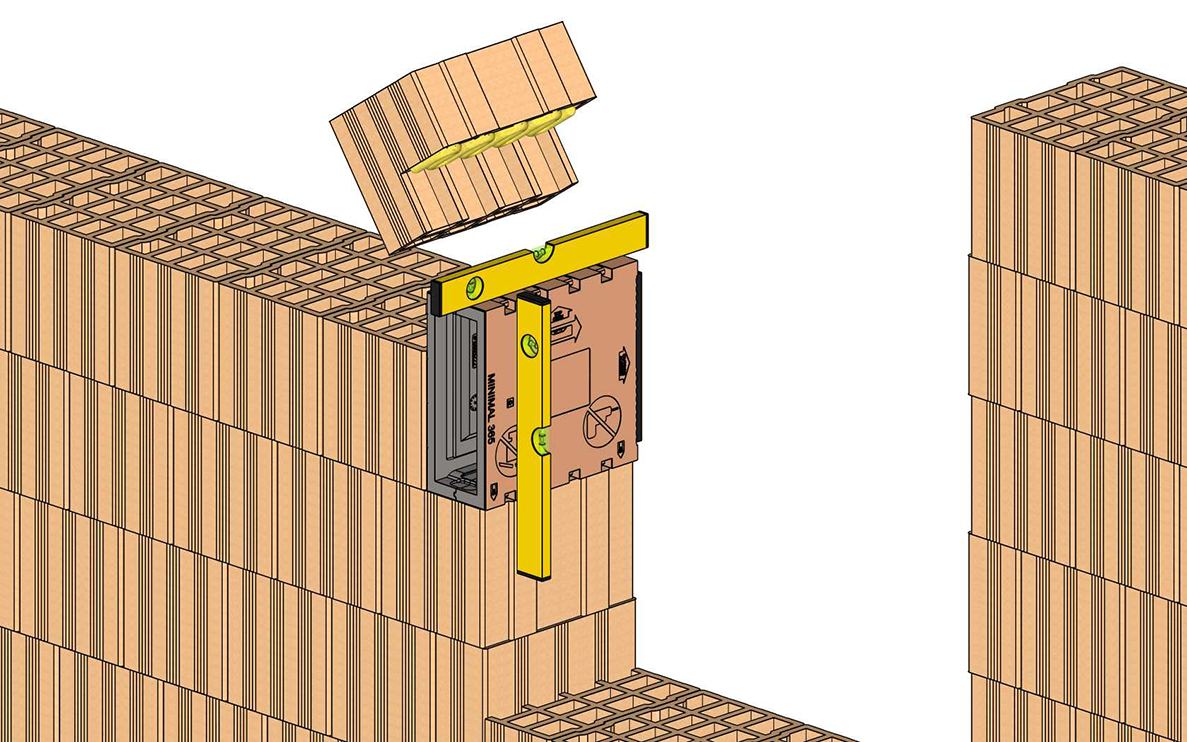
Interior wall
- Wait until the mounting foam has hardened.
- Fit the inner plaster frame: Adjust the frame to the actual masonry thickness and required minimum plaster thickness. To do this, loosen the 4 screws, pull out the frame, place it underneath and screw it back on. The frame can be pulled out up to 15 mm. ATTENTION: Avoid overtightening the screws at all costs.
- Adjust the plaster frame to the plaster thickness (this can be pulled out up to 15 mm). ATTENTION: The screws are only for fixing, not for tightening.
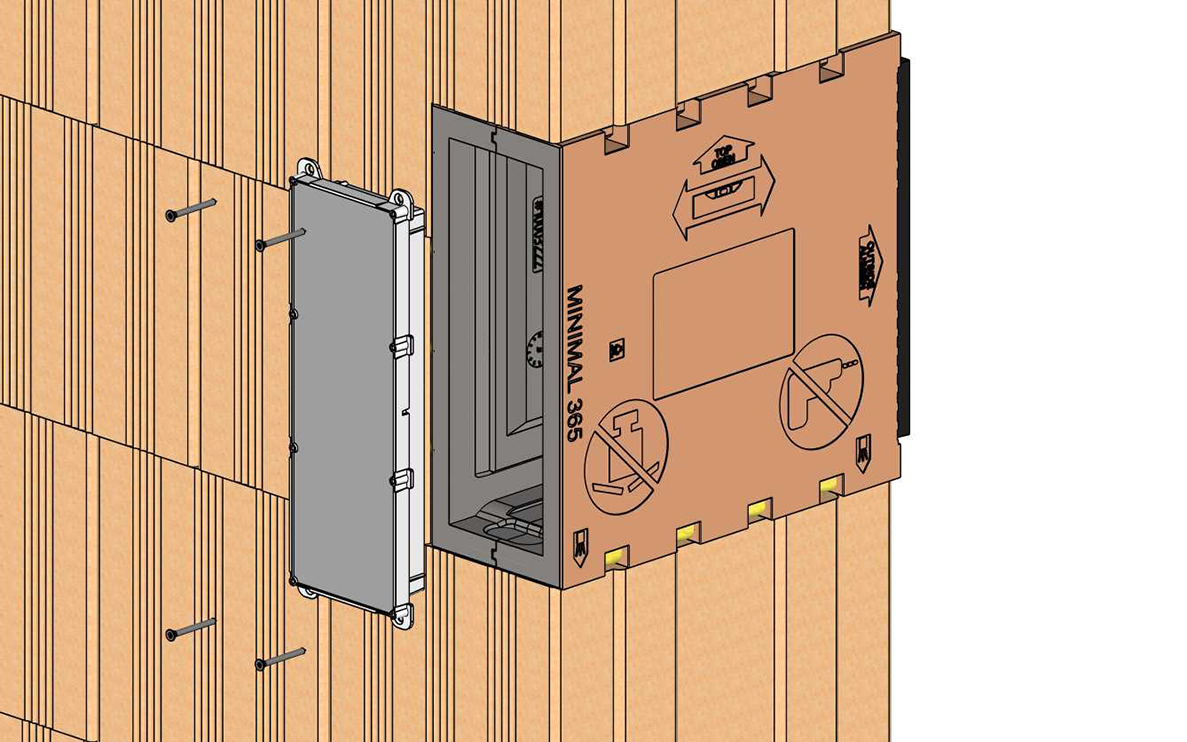
Interior wall
- Check the position on the exterior and interior wall with a rod level. Rework if necessary. Observe minimum plaster thicknesses.
- Align the plaster protection on the outside with the future window soffit. Note the roller shutter rail.
- Set the corner mouldings on the outside and inside. Observe the current state of the art and recognised rules of technology. Leave out the corner mouldings in the area of the mounting sleeve.
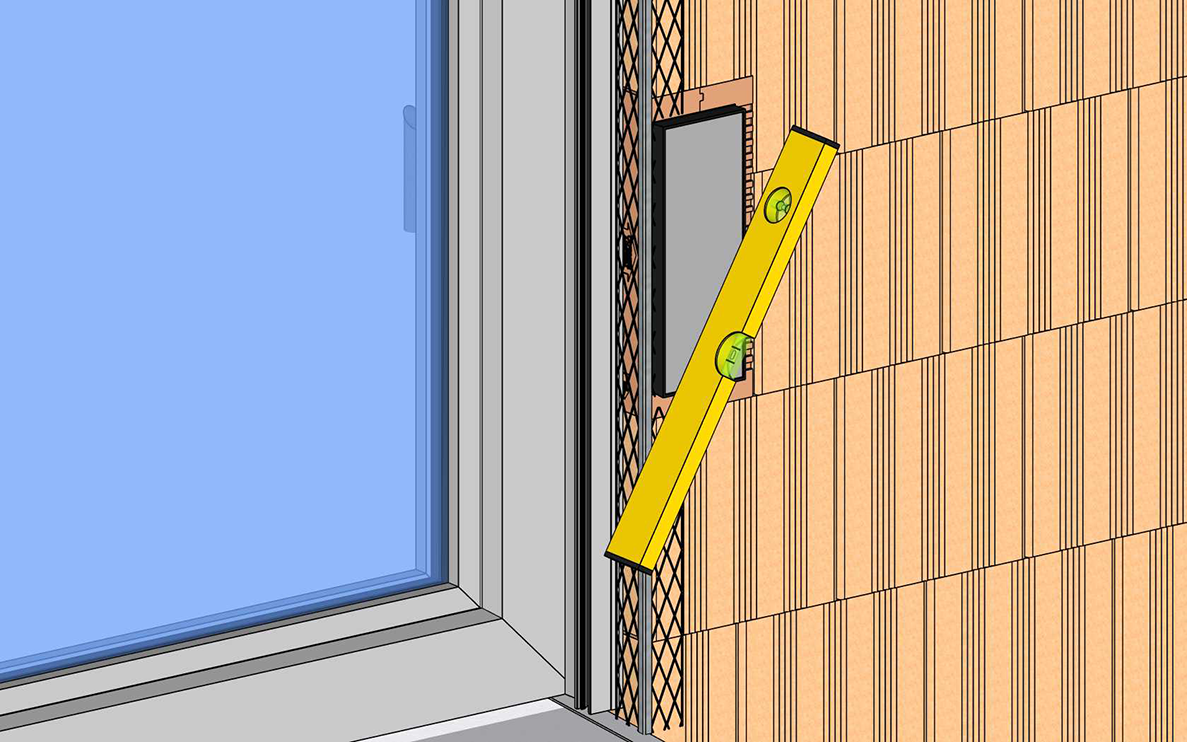
Exterior wall
- Ensure that the plaster frames are correctly positioned, aligned and sealed with the plaster protection on the inside and outside. The frames must not protrude from the finished plaster (max. flush, rather protruding inwards).
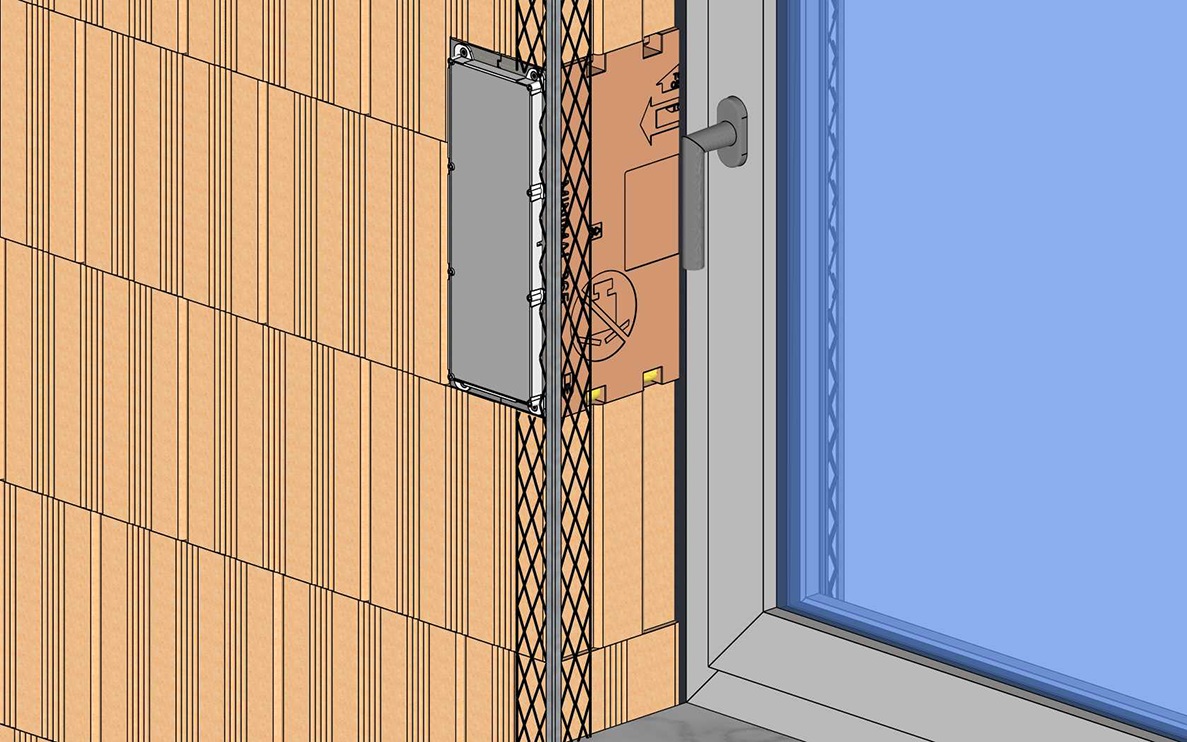
Interior wall
If necessary, adapt the outer and inner corner protection rails on site in the area of the plaster frames.
- Insert the plaster frame into the mounting sleeve, align it and carefully fix it in the mounting sleeve with the 4 screws.
- Ensure that the plaster protection is firmly fitted.
- Plaster the soffit.
Leave the plaster protection in the mounting sleeve until final installation.